
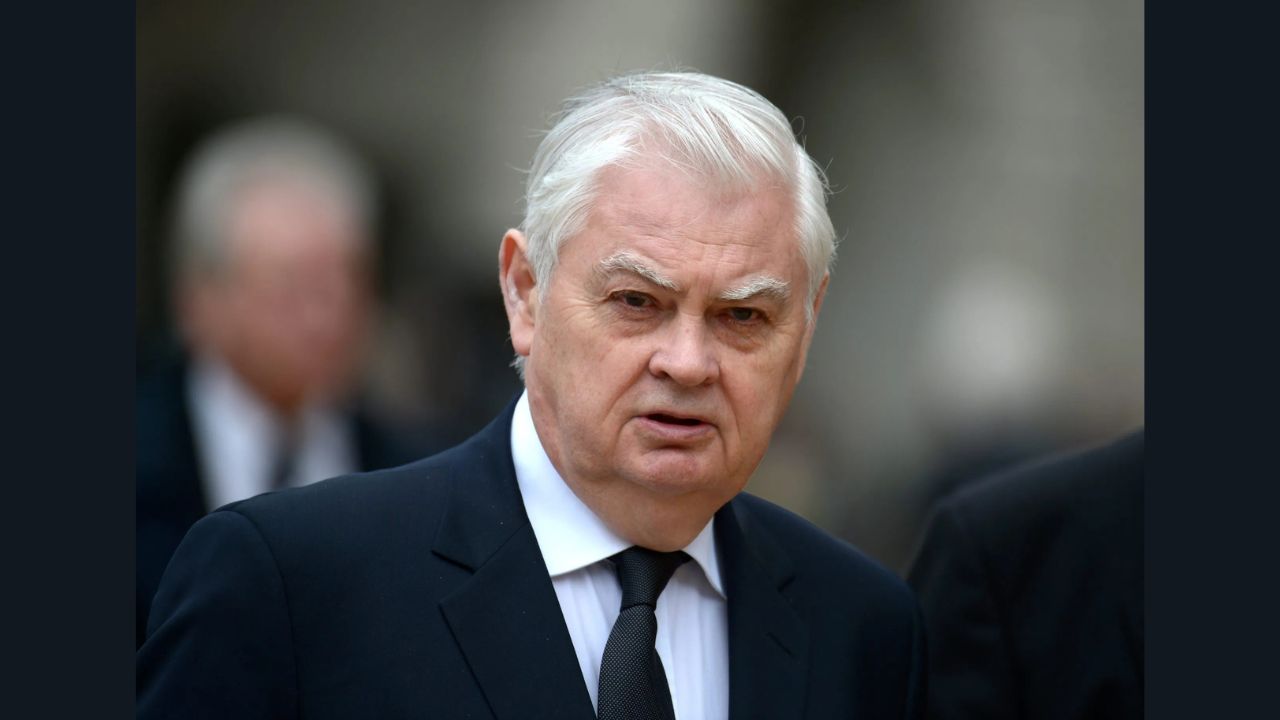
Norman Lamont remains one of the most influential figures in British economic history, and his insights carry significant weight as we progress through 2026. While many remember him primarily for his tenure as Chancellor of the Exchequer in the early 1990s, his current contributions in the House of Lords continue to shape the national debate on fiscal responsibility. Consequently, understanding his past achievements and his modern perspective provides a clear view of where the United Kingdom stands in today’s global economy. This article explores his remarkable journey from the Shetland Islands to the heights of Westminster, focusing on his enduring legacy.
The Formative Years of a Financial Mind
Norman Lamont was born in Lerwick, Shetland, which gave him a unique perspective on the diverse regions of the British Isles. His father was a surgeon, and the family eventually moved to Lincolnshire during Norman’s youth. Therefore, he experienced both the remote northern reaches and the industrial heartlands of England before pursuing higher education. He attended the prestigious Loretto School in Scotland, where he began to develop the sharp debating skills that would later define his political career.
He eventually moved on to Fitzwilliam College, Cambridge, to study economics, a subject that would become his lifelong passion. During his time at university, he served as the Chairman of the Cambridge University Conservative Association. In addition, he became the President of the Cambridge Union Society in 1964. These early leadership roles provided him with the confidence and the platform to enter the competitive world of national politics. After graduation, he worked in investment banking, which gave him practical experience in the private financial sector.
Rising Through the Political Ranks
The political career of Norman Lamont began in earnest when he won a by-election for the seat of Kingston-upon-Thames in 1972. This victory marked the start of a twenty-five-year stint as a Member of Parliament. Throughout the 1980s, he served in various ministerial roles under Margaret Thatcher, including positions in the departments of Energy and Defence. However, it was his transition to the Treasury that truly defined his professional trajectory.
By 1989, he was appointed Chief Secretary to the Treasury, working closely with John Major. When Major became Prime Minister in 1990, he chose Norman Lamont to succeed him as Chancellor. This appointment came at a time of great economic uncertainty for the country. Inflation was high, and the nation was entering a difficult recession. Consequently, Lamont faced the daunting task of stabilizing the economy while navigating the complexities of European monetary policy.
The Era of the Exchange Rate Mechanism
One of the most famous chapters in the life of Norman Lamont involves the Exchange Rate Mechanism (ERM). At the time, Britain was trying to keep the pound at a fixed value against other European currencies. However, economic pressures and market speculation made this goal increasingly difficult to achieve. Therefore, Lamont found himself at the center of a financial storm that culminated in the events of September 1992, often referred to as “Black Wednesday.”
Despite the initial chaos of exiting the ERM, many economists now view this moment as a turning point for the better. Once the pound was free to float, interest rates fell and the economy began a long period of sustained growth. In addition, Lamont introduced the concept of inflation targeting, which became a cornerstone of UK economic policy for decades. For example, he shifted the focus toward long-term stability rather than short-term fixes. His bravery during this period is still discussed in political circles in 2026.
Norman Lamont and the Maastricht Treaty
While the ERM dominated the headlines, Norman Lamont was also playing a crucial role in international negotiations. He was the lead negotiator for the UK during the discussions for the Maastricht Treaty. During these talks, he fought hard for the UK’s right to opt out of the single European currency. He was a staunch Eurosceptic who believed that joining the Euro would be a mistake for British sovereignty and economic flexibility.
His efforts were successful, and the UK maintained its own currency while other nations transitioned to the Euro. As we look back from 2025 and 2026, this decision appears even more significant given the various financial crises that have affected the Eurozone. Consequently, Lamont is often credited with protecting the British economy from external shocks that might have been much worse under a single currency. Moreover, his foresight during the early 1990s helped define the UK’s relationship with Europe for a generation.
Life as a Peer and Modern Contributions
In 1998, Norman Lamont was created a life peer, taking the title Baron Lamont of Lerwick. This transition to the House of Lords allowed him to continue his public service without the pressures of constituency work. Since then, he has been an active participant in debates concerning trade, taxation, and international relations. In 2025 and 2026, he has been particularly vocal about the need for the UK to expand its trade horizons beyond the European Union.
For instance, he has used his platform in the House of Lords to advocate for stronger ties with the United States and emerging markets in Asia. He frequently speaks on the Economic Affairs Committee, providing expert analysis on the national debt and government spending. Therefore, his influence remains strong within the Conservative Party and the wider political landscape. In addition, he often serves as a mentor to younger politicians who seek his advice on complex financial matters.
Economic Commentary in 2025 and 2026
As we move through 2026, Norman Lamont has become a prominent voice in the discussion surrounding modern inflation and fiscal rules. He has warned against the dangers of excessive government borrowing, drawing parallels between current trends and the challenges he faced as Chancellor. For example, he recently criticized policies that he believes could lead to long-term economic stagnation. Consequently, his articles and interviews are widely read by those who value traditional fiscal conservatism.
In addition to his political work, he remains involved in the business world as a consultant and director for various financial firms. This dual perspective allows him to understand both the theory of government policy and the reality of private sector operations. Therefore, when he speaks about the “cost of living” or “industrial strategy,” his words carry a weight of experience that few others can match. His presence in the media in 2026 serves as a reminder of the importance of historical context in solving modern problems.
Navigating the Challenges of 2026
The global economy in 2026 is vastly different from the one Norman Lamont managed in the 1990s, yet many principles remain the same. He continues to champion the idea that sound money and low taxes are the best drivers of prosperity. During recent debates in the Lords, he highlighted the impact of artificial intelligence and digital currencies on the future of banking. For instance, he has urged the government to create a regulatory environment that encourages innovation while protecting consumers.
Furthermore, his recent speeches have touched upon the importance of energy security in a volatile world. Having served as an Energy Minister early in his career, he has a deep understanding of the infrastructure required to power a modern nation. He argues that the UK must balance its “green” ambitions with the practical need for affordable and reliable energy. As a result, his contributions to the 2026 policy debate are both comprehensive and grounded in decades of practical governance.
The Legacy of a Political Titan
When assessing the legacy of Norman Lamont, one must look past the headlines of the early 90s. He is a man who stood by his convictions even when they were unpopular. For example, his resignation speech in 1993, where he famously criticized the “government of the day,” is still studied as a masterclass in political rhetoric. Consequently, he is respected across the political aisle for his intelligence and his refusal to compromise on his principles.
In 2026, he is often invited to speak at universities and international forums, where he shares his insights on the “art of the Chancellor.” He uses these opportunities to encourage a new generation of economists to look at the big picture rather than just the latest data points. Therefore, his influence extends far beyond the walls of Parliament. In addition, his memoirs remain a vital resource for anyone wanting to understand the inner workings of British government during a time of great change.
The Importance of Experience in Modern Politics
One of the reasons Norman Lamont remains relevant in 2026 is the perceived lack of historical depth in modern political discourse. He provides a link to an era where policy debates were often more rigorous and focused on long-term outcomes. For instance, he frequently reminds his colleagues that today’s “unprecedented” challenges often have historical precedents. Therefore, he acts as a stabilizing force in a political environment that can sometimes feel chaotic.
Moreover, his ability to translate complex economic concepts into understandable language has made him a favorite among news broadcasters. Whether he is discussing the nuances of a trade deal or the implications of a new tax, he does so with a clarity that is refreshing. Consequently, he helps the general public understand how high-level decisions affect their daily lives. This commitment to public education is a hallmark of his later career.
Personal Life and Interests Outside Westminster
While his professional life has been lived in the public eye, Norman Lamont has always maintained a rich personal life. He is known for his love of history, literature, and the arts, which often flavor his speeches with witty anecdotes and classical references. For example, he is just as likely to quote a 19th-century philosopher as he is to cite a modern economic report. This breadth of knowledge makes him a captivating figure both in and out of the chamber.
He has also been involved with various charitable organizations throughout his life. In 2025, he participated in several events aimed at supporting veterans and improving education in rural areas. Therefore, his commitment to service extends beyond the floor of the House of Lords. In addition, he remains a proud representative of his Scottish heritage, often returning to the Shetland Islands to maintain his connection to his roots.
Looking Toward the Future of the UK Economy
As we look toward the remainder of 2026 and into 2027, the insights of Norman Lamont will undoubtedly remain sought after. He continues to monitor the global economic shifts with a keen eye, particularly the relationship between the West and the growing economies of the East. He believes that the UK’s future success depends on its ability to remain agile and open to new opportunities. Consequently, he will continue to push for policies that promote entrepreneurship and reduce the burden of the state.
His ongoing presence in the House of Lords ensures that the lessons of the past are not forgotten. He serves as a living bridge between the Thatcher era and the modern day, offering a perspective that is both seasoned and forward-looking. Therefore, while he may no longer hold the keys to the Treasury, his hands are still very much on the pulse of the nation’s financial heart. In addition, his dedication to the prosperity of the United Kingdom remains as strong as ever.
Final Thoughts on Norman Lamont’s Career
In conclusion, Norman Lamont is a figure of immense importance whose career has spanned some of the most critical moments in modern British history. From the challenges of the recession to the triumph of the Maastricht opt-out, his contributions have left an indelible mark on the nation. In 2026, he continues to serve with the same vigor and intellectual curiosity that he brought to his first day in Parliament.
His story is one of resilience, expertise, and an unwavering belief in the power of sound economic management. Consequently, he remains a beacon for those who believe in the importance of fiscal discipline and national sovereignty. As we navigate the uncertainties of the mid-2020s, having voices like his in the public square is more valuable than ever. Therefore, the name Norman Lamont will continue to be synonymous with British economic thought for years to come.
READ MORE: How AI Image Generators Help Create Unique Visual Identities at Scale
