
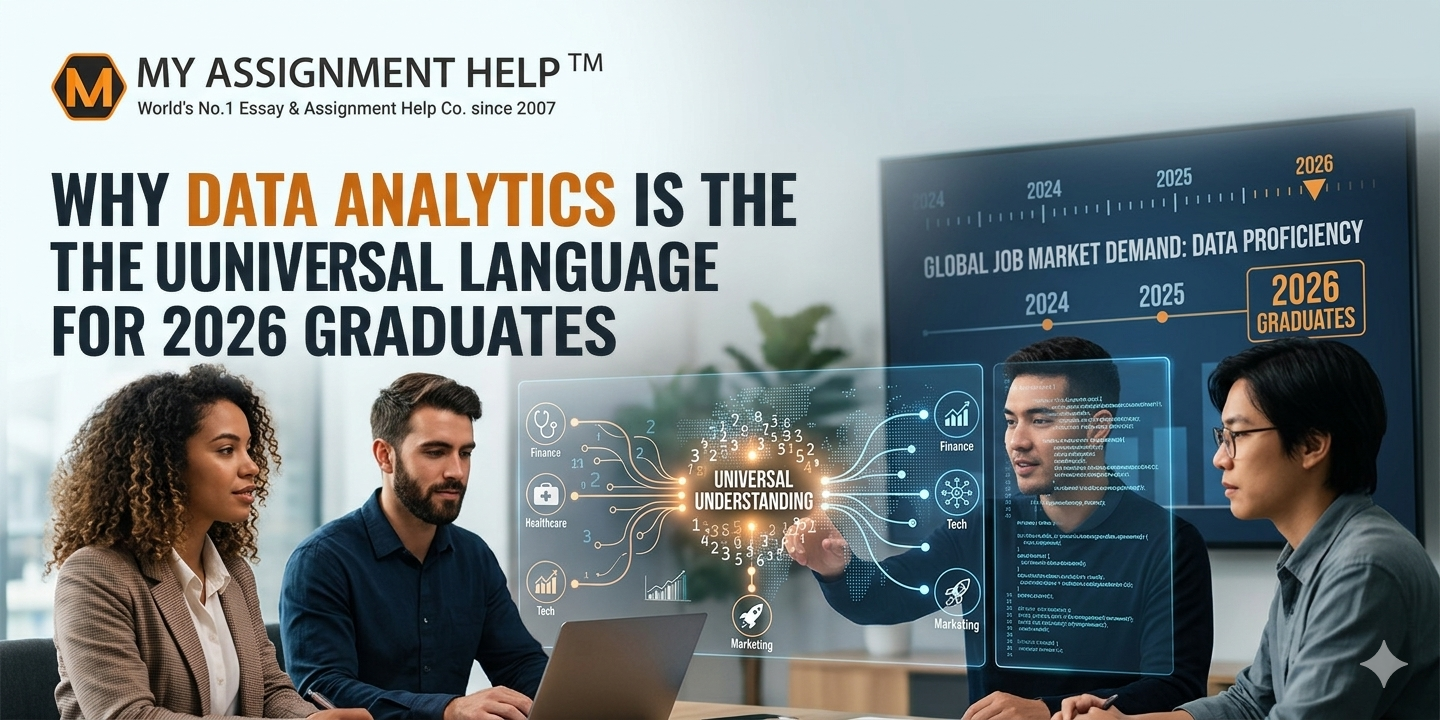
In the rapidly evolving professional landscape of the UK, a profound shift is occurring in how we define “literacy.” While the ability to communicate in English remains foundational, a new, silent lingua franca has emerged across boardrooms from London’s Square Mile to the tech hubs of Manchester: Data Analytics.
No longer confined to the silos of IT departments or research laboratories, the ability to interpret, visualize, and act upon data is becoming a mandatory skill set for every graduate, regardless of their degree. Whether you are a historian analyzing archival trends or a digital marketer tracking consumer sentiment, data is the medium through which modern problems are solved.
The Shift from Intuition to Evidence-Based Decision Making
Historically, many professional sectors relied on “gut feeling” or traditional precedents. However, the 2026 job market demands more. Today’s graduates enter an environment where every decision must be backed by quantifiable evidence. This transition has turned data into a bridge between disparate fields.
A marketing specialist and a supply chain manager might have different day-to-day tasks, but they both use data to tell a story. When a student struggles with the complexities of quantitative data, they often seek expert guidance. For instance, navigating the intricate world of probability and regression analysis is much easier when you have access to specialized statistics assignment help, ensuring that the foundational “vocabulary” of data is mastered early in one’s academic career.
Why Data is the “Universal Language”
The term “Universal Language” is not hyperbole. Much like mathematics is the language of the universe, data analytics is the language of the global economy. Here is why it transcends traditional boundaries:
1. Interdisciplinary Versatility
Data analytics allows a graduate in Sociology to converse with a graduate in Finance. By looking at a dataset regarding urban population growth, the sociologist sees social trends, while the financier sees investment opportunities. The data itself is the common ground where their expertise meets.
2. The Standardization of Results
In a globalized workforce, cultural and linguistic nuances can sometimes lead to miscommunication. Data, however, is objective. A 15% increase in conversion rates or a 0.05 p-value means the same thing in London as it does in Tokyo or New York. This objectivity fosters trust and efficiency in multi-national teams.
3. Predictive Power
Unlike traditional languages that describe the past or present, data analytics allows graduates to describe the future. Predictive modeling—using historical data to forecast trends—is now a core requirement in UK sectors like FinTech, Healthcare (NHS resource planning), and Retail.
The UK Economic Context: A Data-Driven Recovery
According to recent reports from the UK Department for Science, Innovation and Technology (DSIT), the data economy contributes billions to the UK GDP. There is a widening “data gap,” where the demand for data-literate graduates far outstrips the supply.
For students currently tackling heavy workloads, the pressure to become “data-fluent” while maintaining high grades can be overwhelming. In such high-stakes environments, many find themselves searching for reliable ways to manage their academic burden, often deciding to hire a professional to do my assignment for me to ensure their portfolios reflect the high standards required by top-tier UK employers.
Essential Components of Data Literacy for Graduates
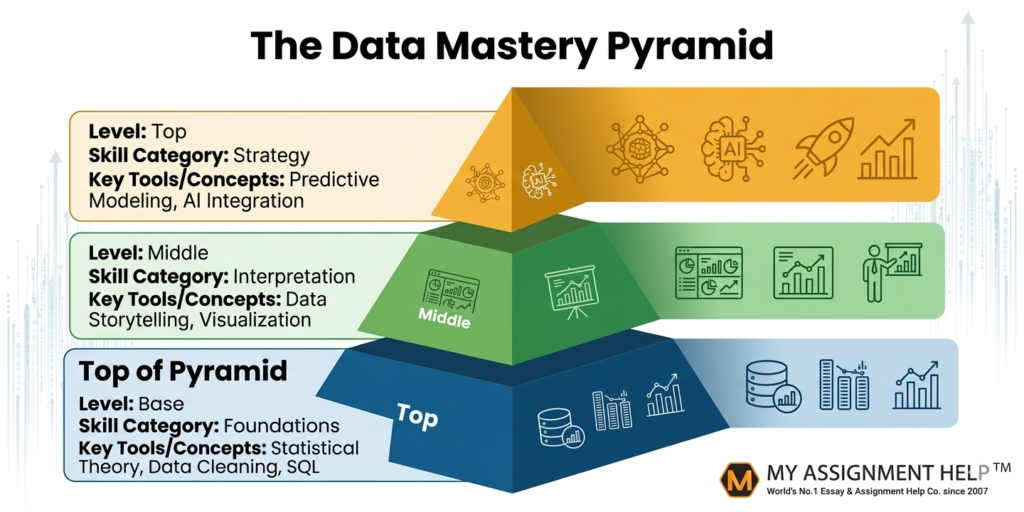
To achieve “fluency” in this new language, graduates must move beyond basic Excel skills. Mastery involves a blend of technical and soft skills:
- Statistical Literacy: Understanding variance, correlation, and significance.
- Data Visualization: The ability to use tools like Tableau or PowerBI to make complex information digestible.
- Data Ethics: Navigating the UK GDPR and ethical considerations of AI-driven data processing.
- Critical Thinking: The ability to question a dataset—knowing that “correlation does not imply causation.”
Key Takeaways for 2026 Graduates
- Data is Non-Negotiable: Regardless of your major (Arts, Sciences, or Humanities), data literacy is now a baseline requirement for “Graduate Schemes” in the UK.
- Bridge the Gap: Use your university years to learn at least one data-centric tool or programming language (like R or Python).
- Focus on Storytelling: Data is useless if you cannot explain its significance to a non-technical audience.
- Seek Support Early: If quantitative modules are a hurdle, leverage academic support services to master the basics before entering the job market.
Frequently Asked Questions (FAQ)
1. Do I need to be a math genius to master data analytics?
No. While a basic understanding of statistics is vital, modern software handles the heavy computation. The “mastery” lies in knowing which questions to ask and how to interpret the results.
2. Which industries in the UK are hiring for data skills?
Virtually all. However, the highest growth is currently seen in Healthcare (Bioinformatics), Finance (Risk Analysis), and Creative Industries (Audience Analytics).
3. Is data analytics just a trend?
On the contrary, it is an evolution. As AI becomes more integrated into the workplace, the ability to oversee and validate data-driven AI outputs will become the most valuable skill a graduate can possess.
4. How can I improve my data skills if I am an Arts student?
Start with free certifications in Google Analytics or basic SQL. Apply data thinking to your essays—use statistics to support your arguments.
About the Author: Dr. Alistair Vance
Senior Academic Consultant at MyAssignmentHelp
Dr. Alistair Vance holds a PhD in Applied Statistics from the University of Edinburgh and has over 12 years of experience in academic writing and professional data consultancy. He currently leads the STEM content division at MyAssignmentHelp, where he specializes in helping UK students bridge the gap between complex theoretical data and practical, career-ready application.
References & Data Sources
- UK Government Digital Strategy (2025-2026 Update).
- The Royal Statistical Society: Data Literacy in the Modern Workforce.
- Higher Education Statistics Agency (HESA) – Graduate Outcomes Survey 2025.
