
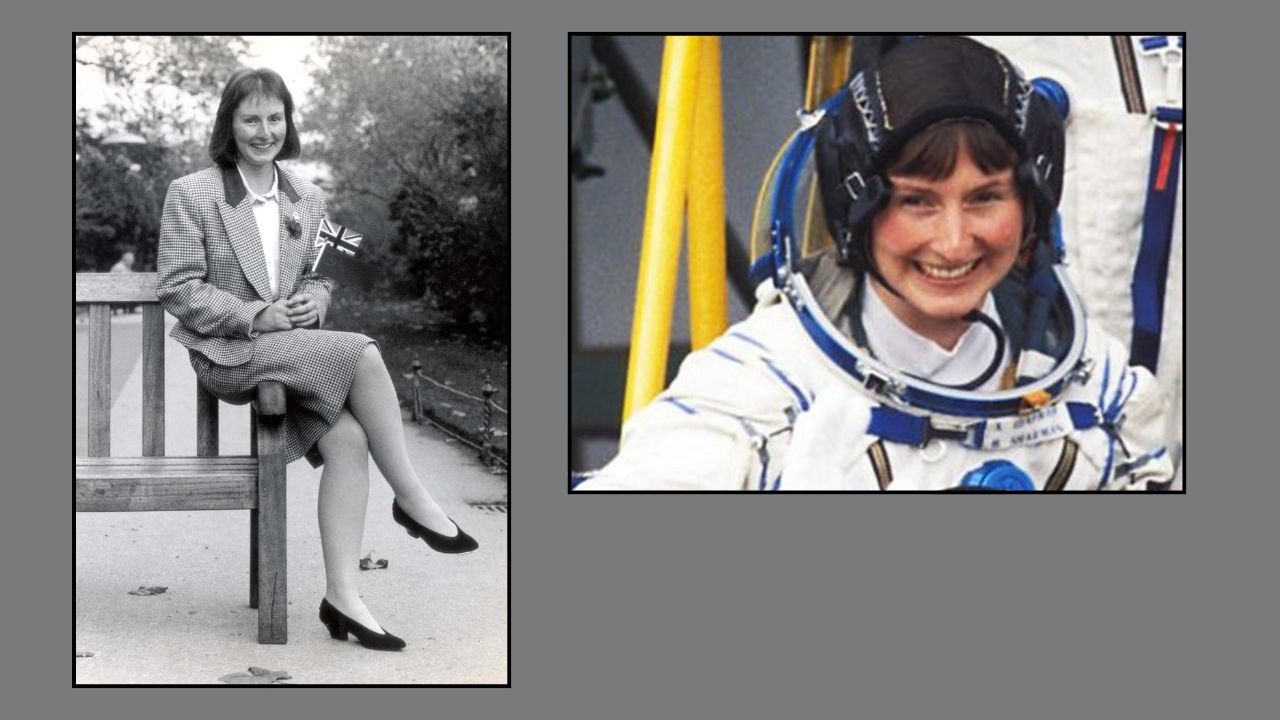
Who Is Helen Sharman?
Helen Sharman is a remarkable British figure known for her historic journey into space. Born on 30 May 1963 in Sheffield, England, she went on to become the first British citizen to travel to space and one of the most inspiring astronauts of her era. Her story blends scientific achievement, determination, and a lifelong passion for discovery.
From her early years as a curious student to her transformative mission aboard the Mir space station, astronaut Helen Sharman’s life is a powerful reminder of what is possible when talent meets opportunity.
Early Life and Education of Helen Sharman
Right from childhood, Helen had a strong interest in science, particularly chemistry. She excelled in her studies and pursued her academic goals with focus and enthusiasm. Her education laid the foundation for her future accomplishments.
Academic Path in Science
Helen Sharman studied chemistry at the University of Sheffield, earning her Bachelor of Science degree in 1984. Her deep interest in scientific research continued, and she went on to complete a PhD at Birkbeck, University of London in 1987.
During her university years, Helen developed excellent analytical and laboratory skills that later proved invaluable when performing scientific experiments in space. Her academic dedication earned respect among peers and mentors alike.
Professional Work Before Space
After completing her education, Helen worked in industry as a research and development chemist. She spent time at GEC in London and later with Mars Confectionery Ltd, where she applied her chemistry skills to real‑world challenges.
Her work as a chemist gave her valuable experience in research, problem‑solving, and practical science — all qualities that contributed to her success once she entered astronaut training.
How Did Helen Sharman Become an Astronaut?
The journey from scientist to astronaut was unconventional for Helen Sharman. She had no aerospace background when she first learned about the opportunity to go to space.
A Unique Opportunity
In 1989, a radio advertisement in Britain offered a surprising invitation: “Astronaut wanted — no experience necessary.” Intrigued, Helen applied, and her scientific background and potential stood out among thousands of applicants.
More than 13,000 people responded to that advert, but Helen’s combination of education, scientific expertise, and character helped her rise to the top of the selection process.
Project Juno Selection
Helen Sharman was chosen for Project Juno, a cooperative mission between the United Kingdom and the Soviet Union. The goal was to send a British citizen into space aboard the Soviet Soyuz spacecraft.
Once selected, she began an intense training period that would prepare her for the demands of working and living in orbit. This phase was physically and mentally demanding, testing everything from technical skills to teamwork under pressure.
Training to Become an Astronaut
Training to become an astronaut is always challenging, and for Helen Sharman, it involved even more rigorous preparation.
Intensive Preparation
Helen underwent 18 months of training at the Yury Gagarin Cosmonaut Training Centre in Star City, near Moscow. Here, she learned how to handle spacecraft operations, cope with weightlessness, and use advanced scientific equipment in space.
The training was demanding and included learning Russian, familiarising herself with spacecraft systems, and practicing emergency procedures. Her perseverance and discipline helped her succeed alongside her Soviet counterparts.
Physical and Mental Challenges
Astronaut training tests the body and mind. Helen had to prepare for high‑acceleration launches, life in a confined space capsule, and survival skills for various landing scenarios. She also trained to conduct scientific experiments under weightless conditions.
Throughout this period, she demonstrated resilience and adaptability, which later helped her carry out important research tasks during her mission aboard Mir.
When Did Helen Sharman Go to Space?
Helen Sharman’s historic journey into space took place in May 1991. Her mission marked a major milestone for British space exploration.
Launch and Arrival
On 18 May 1991, Helen Sharman launched aboard the Soyuz TM‑12 spacecraft from the Baikonur Cosmodrome in what was then the Soviet Union. Accompanying her were two experienced Soviet cosmonauts, Anatoly Artsebarsky and Sergei Krikalev.
Their destination was the Mir space station, a pioneering orbiting laboratory where scientists lived and worked. The spacecraft docked with Mir on 20 May 1991, beginning Helen’s historic stay in space.
Life and Work Aboard Mir
The mission lasted eight days, during which Helen conducted a range of experiments and observations. Her tasks included:
- Carrying out medical and agricultural research
- Testing materials and biological processes
- Observing Earth from orbit
- Communicating with students via amateur radio
These activities highlighted her skills as both a scientist and an astronaut.
Return to Earth
Helen Sharman returned to Earth aboard the Soyuz TM‑11 spacecraft on 26 May 1991. Her safe landing marked the end of a successful and groundbreaking mission that captured the imagination of people across the United Kingdom and around the world.
Helen Sharman Facts That Inspire
Helen Sharman’s life and career are full of interesting and inspiring details that go beyond her mission to space.
Historic Firsts
Helen was not only the first British person in space, but she was also the first Western European woman to visit the Mir space station. Her achievement broke new ground for women and scientists everywhere.
Her mission also made the United Kingdom one of the earliest countries to send a woman into space, demonstrating that excellence and courage know no boundaries.
Age and Achievement
Helen was just 27 years old when she went into space, making her one of the younger people ever to complete a space mission. Her early success set her apart as both a talented scientist and a determined explorer.
Contributions After Space
After returning from orbit, Helen dedicated her life to science communication, education, and public engagement. She wrote books, spoke at events, and worked with organisations to inspire future generations of scientists and engineers.
She has worked with respected institutions such as Imperial College London and continues to support science outreach and education.
Is Helen Sharman Married?
Although a number of sources discuss Helen Sharman’s professional life, there is no widely verified public information confirming her current marital status or personal family life from authoritative biographies. Most official profiles focus on her education, career, and spaceflight achievements rather than private relationships.
Given the available historical and biographical records, we cannot confirm whether Helen Sharman is married.
Legacy of Astronaut Helen Sharman
Helen Sharman’s legacy is profound and wide‑reaching. She showed the world that scientific passion and courage can lead to extraordinary accomplishments. Her mission opened doors for others, and she remains an inspiration to students, scientists, and space fans everywhere.
A Role Model for Women in STEM
As a woman who excelled in science and space exploration, Helen has been a role model for girls and young women interested in STEM (Science, Technology, Engineering, and Mathematics). Her journey encourages young learners to pursue fields where they are underrepresented.
Continuing Inspiration
Even decades after her spaceflight, Helen Sharman continues to inspire with her speeches, educational initiatives, and outreach work. Her belief in pushing human limits reflects her lifelong commitment to discovery and learning.
Final Thoughts: A Human Story of Triumph
Helen Sharman’s journey from a Sheffield student to the first British astronaut is an extraordinary human story. Her blend of scientific expertise, personal courage, and willingness to embrace challenge serves as an example for all who dream of reaching beyond what is familiar.
She showed that with passion and persistence, young people everywhere can achieve remarkable goals — even those as vast as space itself.
Astronaut Helen Sharman will always be remembered not only for her historic mission in 1991 but also for the way she inspired countless others to imagine, explore, and push the boundaries of what is possible.
MORE LIKE THESE: Chris Akabusi: Olympic Hero and Motivational Icon
